Chromatics
Chromatics

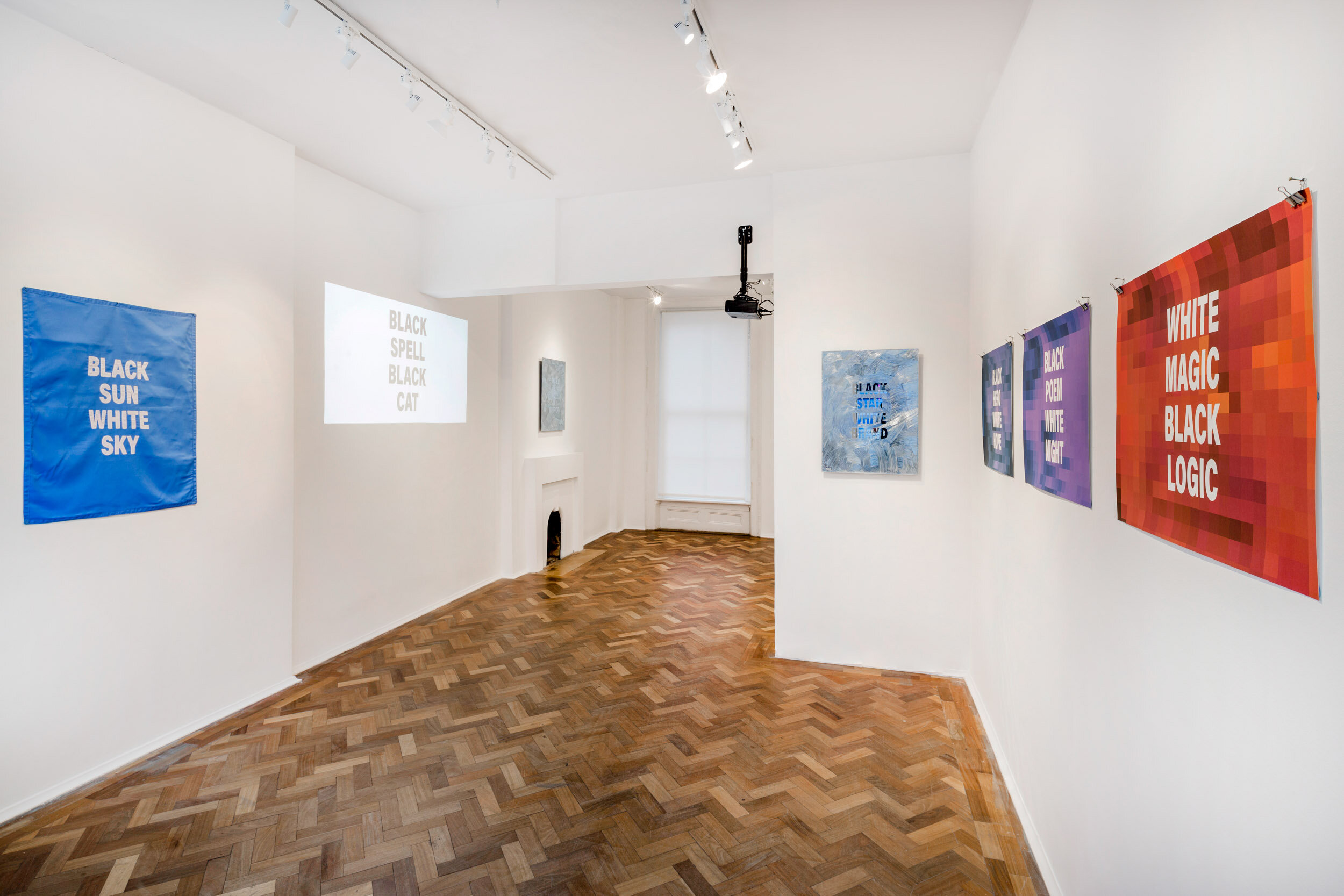
Chromatics is a generative video poem in three movements. A program recombines a fixed vocabulary of 256 common three-to-five-letter English nouns, among the most frequently used in the language to produce four-word stanzas built from the colour adjectives black, blue, red and white together with common nouns. Each stanza carries a number identifying it within the set of possible combinations.

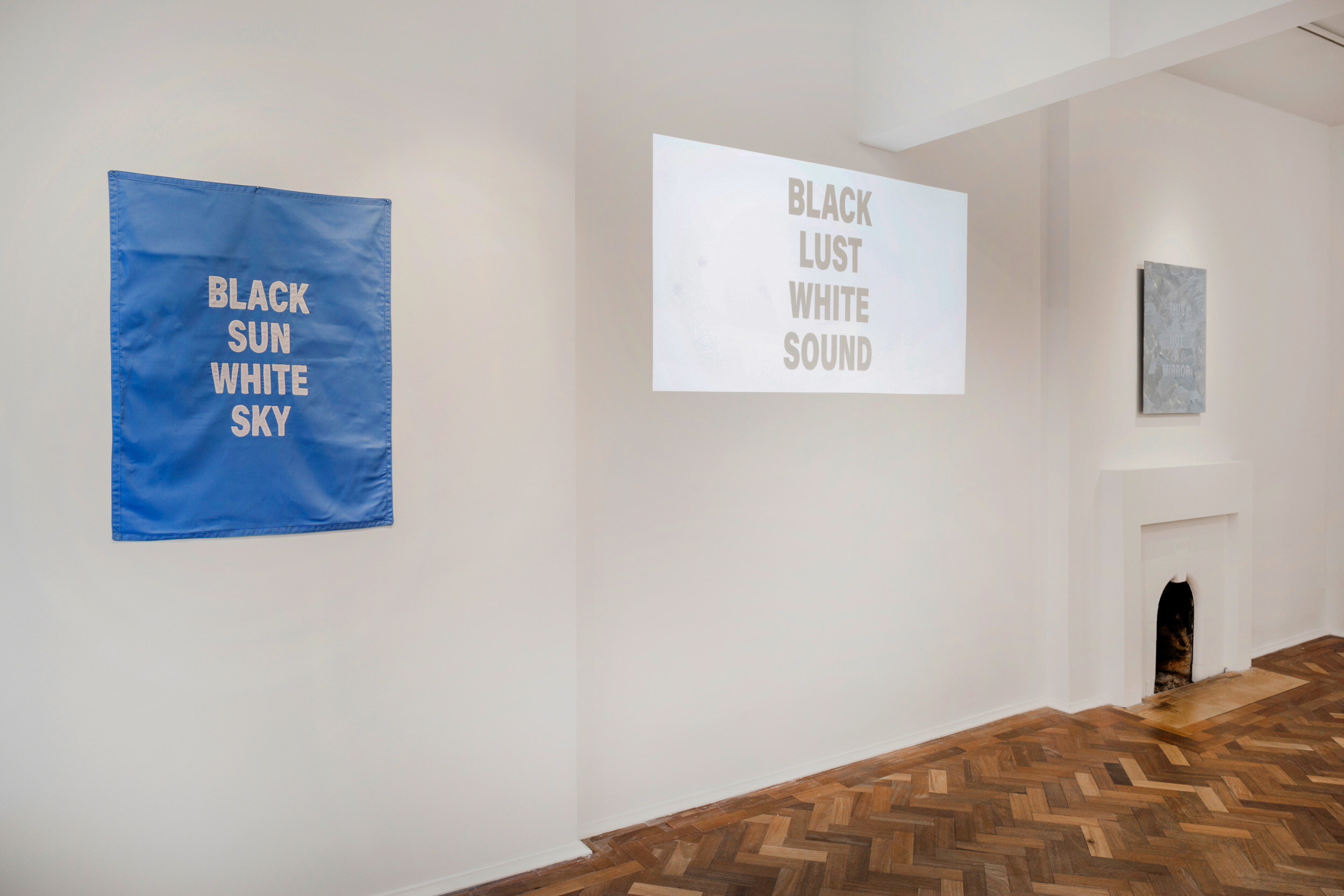
The work was first presented in 2018 in a solo exhibition at 50 Golborne Gallery, London.

An extended version of the installation was shown at the 21st Contemporary Art Biennial Sesc_Videobrasil, Imagined Communities, at Sesc 24 de Maio, São Paulo, from 9 October 2019 to 2 February 2020.

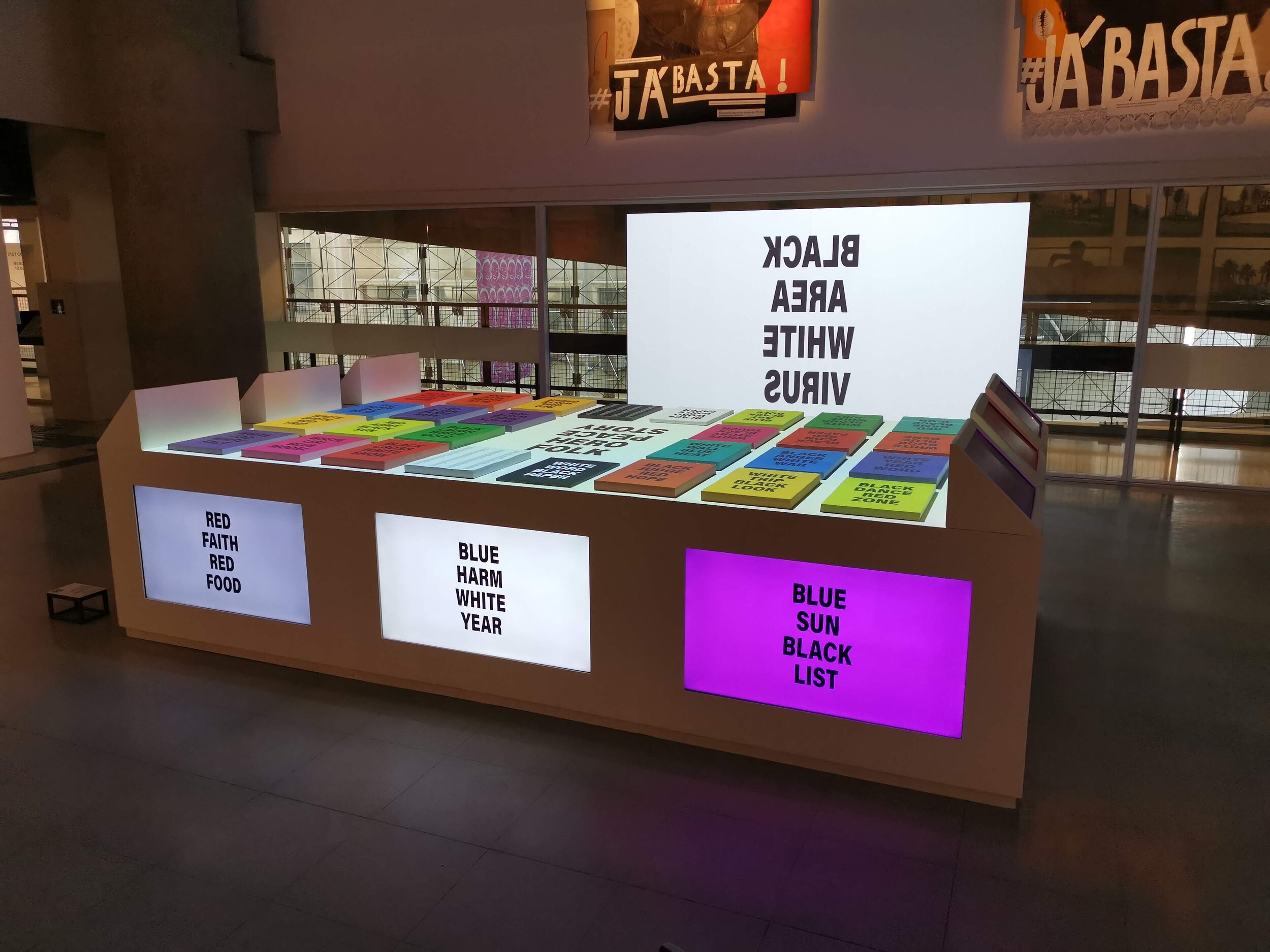
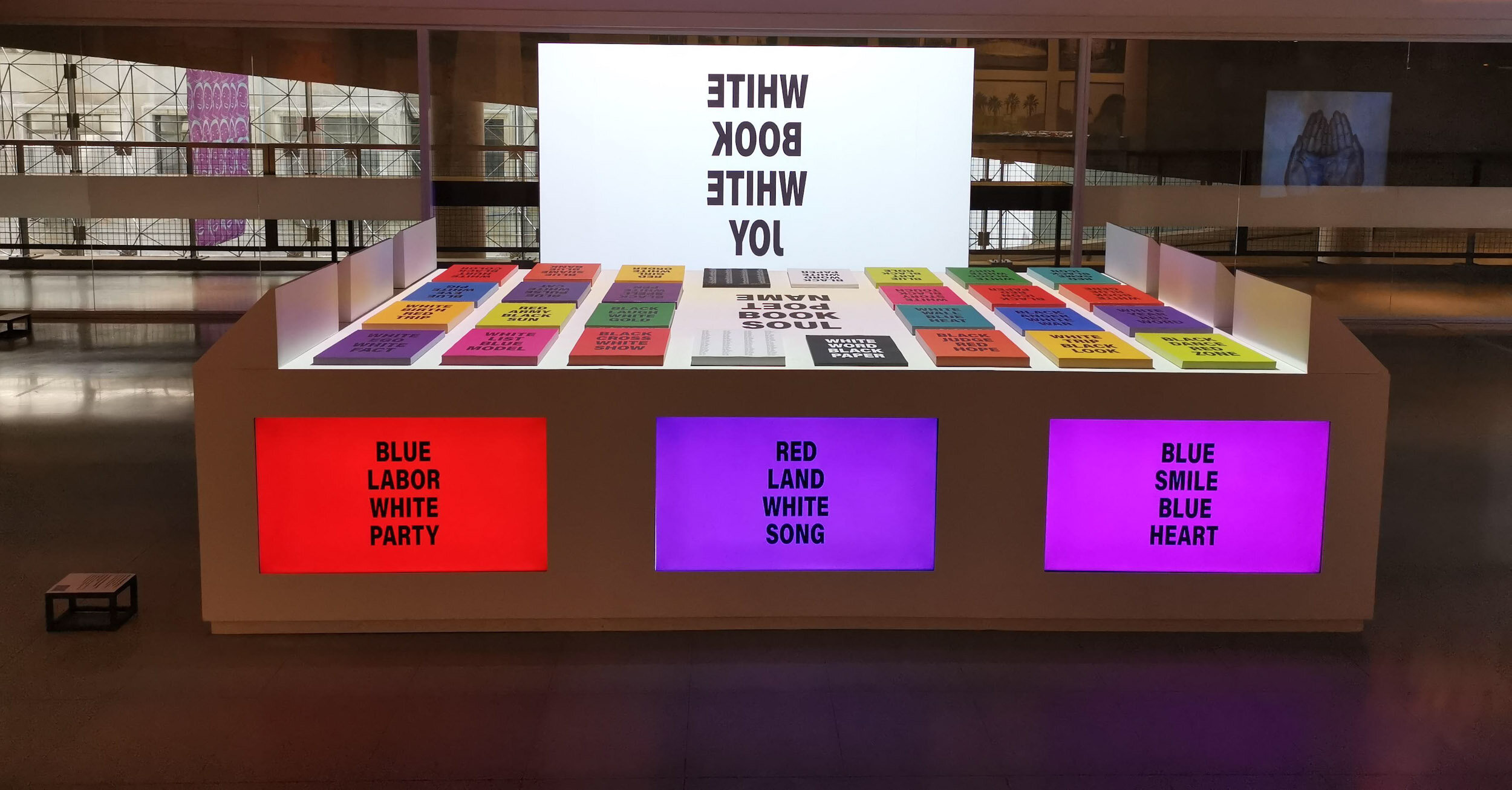
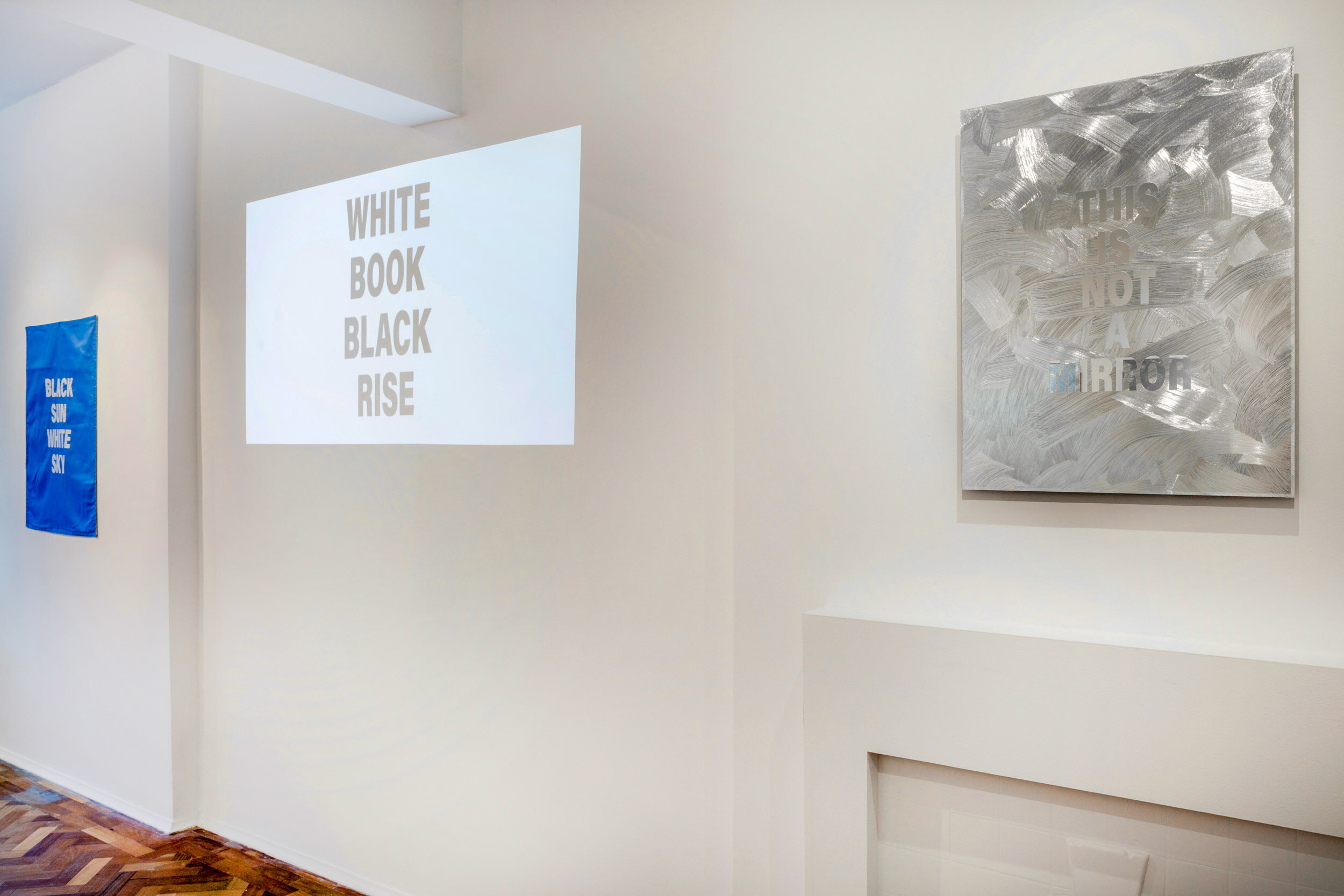
This version brought together all three movements of the work, I, II and III. It consisted of 12 screens set into an exhibition unit, a projection directed from the ceiling onto the surface of the unit, and a second projection onto a screen facing the installation, against a glass wall. The videos ran on a loop, without sound.

Stacks of A3 posters were laid out on the surface of the unit, printed in some thirty different stanzas, each in its own colour. 28 000 posters were printed for the duration of the exhibition. Visitors could take one away.

Movement III is distinguished by the layout of its stanzas, two lines printed upright and two lines inverted.
 The piece unfolds across three movements: the first pairs the nouns with black and white, yielding 130,560 reversible stanzas; the second opens the palette to all four colors, reaching 522,240 stanzas; and the third allows the words to combine freel

The piece unfolds across three movements: the first pairs the nouns with black and white, yielding 130,560 reversible stanzas; the second opens the palette to all four colors, reaching 522,240 stanzas; and the third allows the words to combine freely with one another, bringing the total to 175,445,440 possible stanzas. The work is conceived in the lineage of the Oulipo, the movement that used constrained, combinatorial methods to generate literature.
The work was first presented in 2018 in a solo exhibition at 50 Golborne Gallery, London.
 An extended version of the installation was shown at the 21st Contemporary Art Biennial Sesc_Videobrasil, Imagined Communities, at Sesc 24 de Maio, São Paulo, from 9 October 2019 to 2 February 2020. This version brought together all three movements

An extended version of the installation was shown at the 21st Contemporary Art Biennial Sesc_Videobrasil, Imagined Communities, at Sesc 24 de Maio, São Paulo, from 9 October 2019 to 2 February 2020.
This version brought together all three movements of the work, I, II and III. It consisted of 12 screens set into an exhibition unit, a projection directed from the ceiling onto the surface of the unit, and a second projection onto a screen facing the installation, against a glass wall. The videos ran on a loop, without sound.
 Stacks of A3 posters were laid out on the surface of the unit, printed in some thirty different stanzas, each in its own colour. 28 000 posters were printed for the duration of the exhibition. Visitors could take one away. Movement III is distinguis

Stacks of A3 posters were laid out on the surface of the unit, printed in some thirty different stanzas, each in its own colour. 28 000 posters were printed for the duration of the exhibition. Visitors could take one away.
Movement III is distinguished by the layout of its stanzas, two lines printed upright and two lines inverted.
 Chromatics is grounded in the necessity of a radical fight against racism, "radical" meaning that the fight should also be symbolic and conceptual, in order to achieve two goals. First, exposing and eradicating the racialization conditioning that cr

Chromatics is grounded in the necessity of a radical fight against racism, "radical" meaning that the fight should also be symbolic and conceptual, in order to achieve two goals. First, exposing and eradicating the racialization conditioning that creates, through automatic thinking, a mainly subconscious linguistic "apartheid", Black and non-Black, White and non-White, with very real social and political consequences.
Then proposing a human-centric perspective towards political action, based on transethnic human values, to replace ethno-centric essentialisations and categorizations.
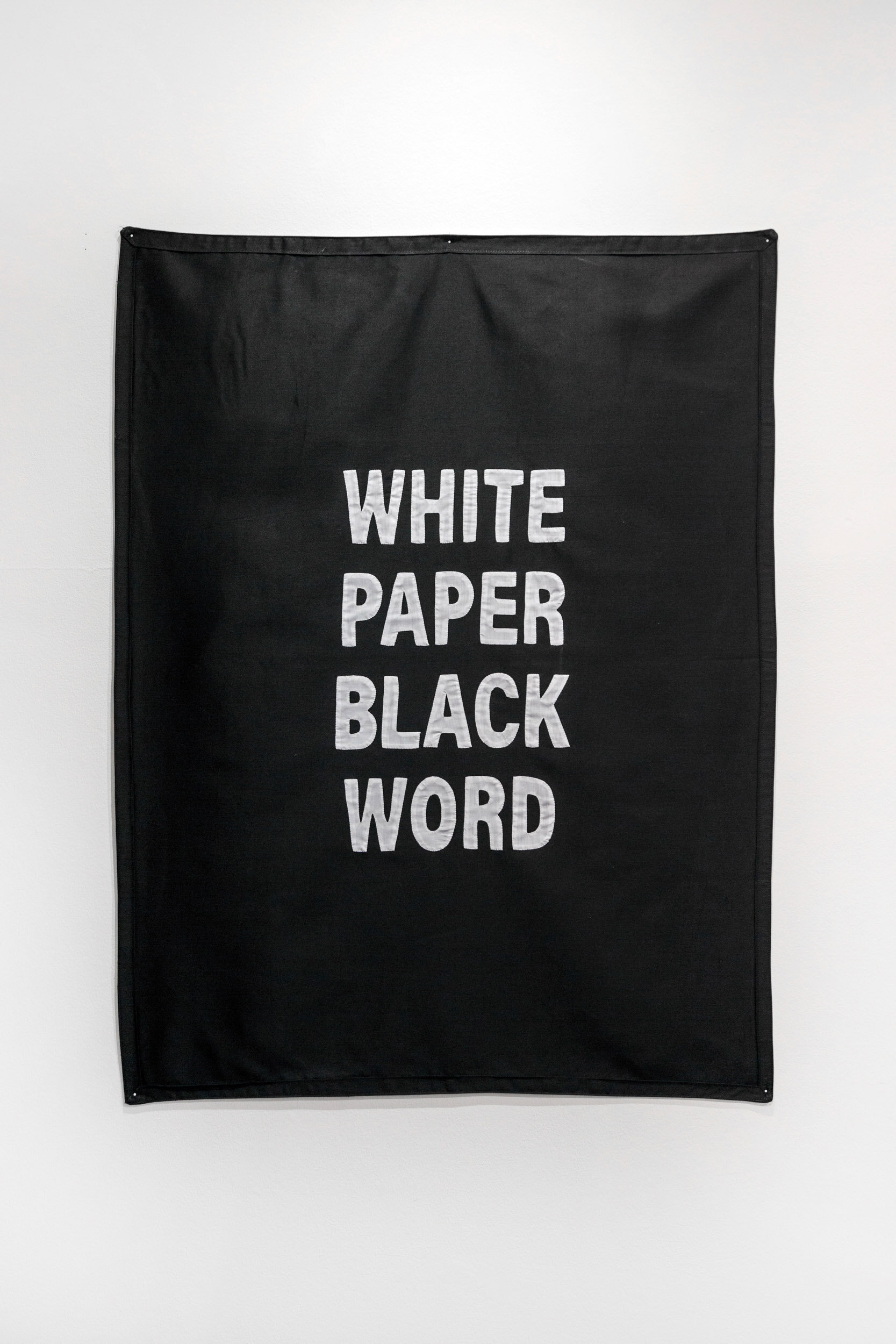
 All the stanzas are reversible. The poems are expressed or manifested in any possible form depending on the exhibition space: displayed on video, inscribed on paper, posters, books or mirrors, sewn, drawn or spoken, printed on T-shirts and worn, per

All the stanzas are reversible.
The poems are expressed or manifested in any possible form depending on the exhibition space: displayed on video, inscribed on paper, posters, books or mirrors, sewn, drawn or spoken, printed on T-shirts and worn, performed rhythmically in morse code or through symbols, combined with other images.
Chromatics New_LR 7.JPG
Chromatics
 The piece unfolds across three movements: the first pairs the nouns with black and white, yielding 130,560 reversible stanzas; the second opens the palette to all four colors, reaching 522,240 stanzas; and the third allows the words to combine freel
 An extended version of the installation was shown at the 21st Contemporary Art Biennial Sesc_Videobrasil, Imagined Communities, at Sesc 24 de Maio, São Paulo, from 9 October 2019 to 2 February 2020. This version brought together all three movements
 Stacks of A3 posters were laid out on the surface of the unit, printed in some thirty different stanzas, each in its own colour. 28 000 posters were printed for the duration of the exhibition. Visitors could take one away. Movement III is distinguis
 Chromatics is grounded in the necessity of a radical fight against racism, "radical" meaning that the fight should also be symbolic and conceptual, in order to achieve two goals. First, exposing and eradicating the racialization conditioning that cr
 All the stanzas are reversible. The poems are expressed or manifested in any possible form depending on the exhibition space: displayed on video, inscribed on paper, posters, books or mirrors, sewn, drawn or spoken, printed on T-shirts and worn, per
Chromatics New_LR 7.JPG
Chromatics

Chromatics is a generative video poem in three movements. A program recombines a fixed vocabulary of 256 common three-to-five-letter English nouns, among the most frequently used in the language to produce four-word stanzas built from the colour adjectives black, blue, red and white together with common nouns. Each stanza carries a number identifying it within the set of possible combinations.

The work was first presented in 2018 in a solo exhibition at 50 Golborne Gallery, London.

An extended version of the installation was shown at the 21st Contemporary Art Biennial Sesc_Videobrasil, Imagined Communities, at Sesc 24 de Maio, São Paulo, from 9 October 2019 to 2 February 2020.

This version brought together all three movements of the work, I, II and III. It consisted of 12 screens set into an exhibition unit, a projection directed from the ceiling onto the surface of the unit, and a second projection onto a screen facing the installation, against a glass wall. The videos ran on a loop, without sound.

Stacks of A3 posters were laid out on the surface of the unit, printed in some thirty different stanzas, each in its own colour. 28 000 posters were printed for the duration of the exhibition. Visitors could take one away.

Movement III is distinguished by the layout of its stanzas, two lines printed upright and two lines inverted.

The piece unfolds across three movements: the first pairs the nouns with black and white, yielding 130,560 reversible stanzas; the second opens the palette to all four colors, reaching 522,240 stanzas; and the third allows the words to combine freely with one another, bringing the total to 175,445,440 possible stanzas. The work is conceived in the lineage of the Oulipo, the movement that used constrained, combinatorial methods to generate literature.
The work was first presented in 2018 in a solo exhibition at 50 Golborne Gallery, London.

An extended version of the installation was shown at the 21st Contemporary Art Biennial Sesc_Videobrasil, Imagined Communities, at Sesc 24 de Maio, São Paulo, from 9 October 2019 to 2 February 2020.
This version brought together all three movements of the work, I, II and III. It consisted of 12 screens set into an exhibition unit, a projection directed from the ceiling onto the surface of the unit, and a second projection onto a screen facing the installation, against a glass wall. The videos ran on a loop, without sound.

Stacks of A3 posters were laid out on the surface of the unit, printed in some thirty different stanzas, each in its own colour. 28 000 posters were printed for the duration of the exhibition. Visitors could take one away.
Movement III is distinguished by the layout of its stanzas, two lines printed upright and two lines inverted.

Chromatics is grounded in the necessity of a radical fight against racism, "radical" meaning that the fight should also be symbolic and conceptual, in order to achieve two goals. First, exposing and eradicating the racialization conditioning that creates, through automatic thinking, a mainly subconscious linguistic "apartheid", Black and non-Black, White and non-White, with very real social and political consequences.
Then proposing a human-centric perspective towards political action, based on transethnic human values, to replace ethno-centric essentialisations and categorizations.

All the stanzas are reversible.
The poems are expressed or manifested in any possible form depending on the exhibition space: displayed on video, inscribed on paper, posters, books or mirrors, sewn, drawn or spoken, printed on T-shirts and worn, performed rhythmically in morse code or through symbols, combined with other images.

show thumbnails